Category
Reviews
-

B-sides: Fyodor Dostoevsky’s “The Adolescent”
“It is among Dostoevsky’s wildest, sloppiest, least-loved works—and there has never been a better time to read it.”


-

Necessary Villains: Explaining Cultural Marxism
“If Jews didn’t exist, the right would need to invent them, to act as the snake in the garden.”
-

What Happens When Belief Stops Mattering?
“From the crushing of the Prague Spring in 1968 to the advent of Gorbachev’s glasnost in the mid-1980s, the Soviet Union was sustained not by terror or conviction, but by something harder to name: a routinization of participation.”
-

The Golden Age of TV
“Danielewski, it seems, is not acting as a writer here, but as a hoarder of phrases, the more redolent of a vanished “Western” mode of living, the better.”
-

American Metamorphoses
“That rivers and wild rice can now become legal persons discloses the precarity of previously entrenched definitions of nature, personhood, property, and law: that is, the terms that constitute a world.”
-

Pied Noir Homesick Blues
Camus opens the book with Meursault’s life, but François Ozon opens the new film adaptation with Meursault’s specific moment in history: the brutal French colonization of Algeria.
-

The Life of the Mind of a Factory Worker
“Beware to those who read ‘Adrift in the South’ solely as a cautionary tale about the Chinese state without considering the international flows of goods and power.”
-
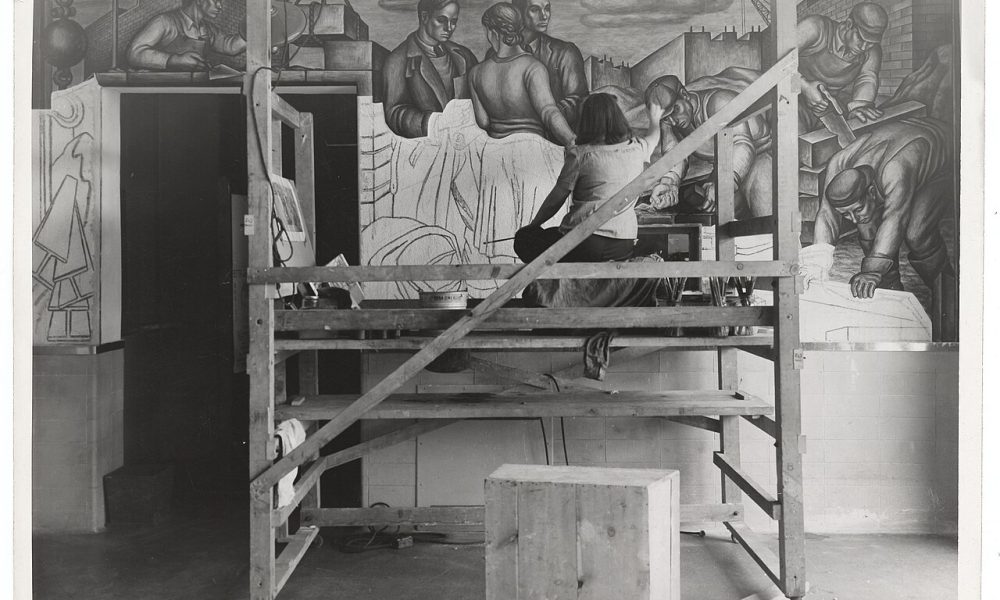
Long-Distance Talkers: The Great Depression Speaks
During the Great Depression, the Works Progress Administration conducted thousands of interviews among American workers. Anne Trubek’s “American Made” gives them new voice.
-

The Treachery of Machine Realism
“The bombed elementary school in Iran appears to have become a target thanks to satellite imaging. In this case, what the image represented — and to who — was a matter of life and death.”
-

Rachel Cusk’s Diminishing Returns
“Cusk remains one of the most formally restless novelists of our time. The trouble is that this inventiveness may now be outpacing Cusk’s thinking.”
-

If on a Winter’s Night a Reader…
We read to find ourselves. But what if, instead, we end up finding ourselves only in books? What if we can’t distinguish our life from those we read about? What if we stop trying to?
-

My Job Is to Fulfill Your Infantile Desire
“The outrageous expectations placed on Chinese e-commerce couriers may surprise western readers. … Such interactions document consumers’ obliviousness to labor along the supply chain.”
-

Birds Beyond Birding
“Looking at birds helps us notice connections, imagine better worlds, and build new solidarities across differences, including across species.”
-

Literature in the Time of Suicide
“In both these Spanish-language novels, thinking about suicide is not only to grapple with someone else’s decision to die, but also inevitably with one’s own decision to go on living.”
-

Can Centuries-Old Nuns Really Save Us from Ourselves?
“Can looking to women beholden to God help us escape a society so fixated on itself? Or does it simply package those devout lives as the latest content for a culture industry desperate for the next trending topic?”
-

Conflicted Futures, Convex Literatures
“The novel’s distinctive capacity for revealing unexpected links can shed new light on how we consider and counter crises.”
-

The Allure of Postcolonial Pathos
“To what extent might the Booker—and venues like it in Europe and the US—be drawn for self-serving reasons to fiction like Kiran Desai’s?”
-

B-Sides: “Somebody Is Walking on Your Grave: My Cemetery Journeys” by Mariana Enriquez
“I spent my adolescence in Buenos Aires and made my own fumbling pilgrimages to that city’s cemeteries.”
-

On Our Nightstands: July 2026
At Public Books, our editorial staff and contributors are hard at work to provide readers with thought-provoking articles. But when the workday is done, what is actually on our nightstands? Here we bring you, in our own words, a behind-the-scenes look at what we have been reading this month. Nicholas Dames Editor in Chief Frederic…
-

What Keeps the Dutch Up at Night?
Although the novels’ protagonists are fascinating, even magnetic characters, they are eerie—all the more so because their unsettling behavior forces the reader to confront what most worries the Netherlands.
-

Toward the Next Century of Carmen Martín Gaite
A literary genius who remained in Fascist Franco Spain, she created new, hybrid literary genres, even while fluidly moving from fiction to nonfiction and back.