Section
Borderlands

-

“Hispanic Heritage” Is Hemispheric Sovereignty
What unites the nations and peoples represented in the United States’ “Hispanic Heritage Month”? And what should we be celebrating?
-
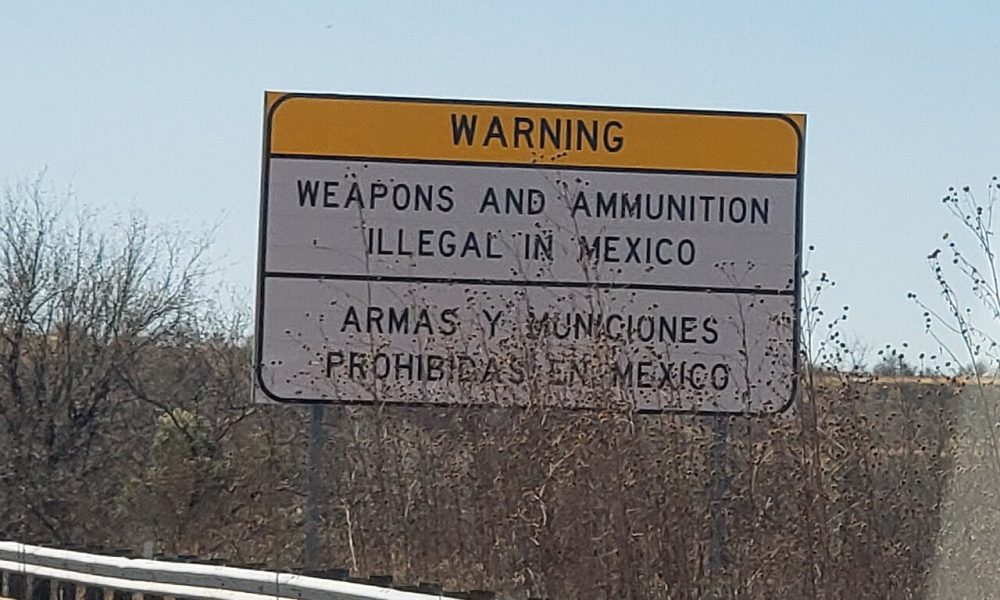
“Our Guns Make the Violence That People Are Fleeing”: Ieva Jusionyte on Guns & Violence in Mexico
-

A Tale of Two Families: Birthright Citizenship and Family Reunification for Chinese Migrants in 1925
-

Documenting Birthright Citizenship under Chinese Exclusion
-

The Right to Return: Chinese Merchants, the Scott Act, and Legal Knowledge in an Era of Exclusion


-

The Weapon of Child Separation
In “Until I Find You,” historian Rachel Nolan carefully navigates the omissions and fabrications in the documentary record associated with adoptions of children in Guatemala.
-

National Sovereignty’s Foundational Violence
“The line belongs to the government,” explains a Guatemalan “smuggler” of the border with Mexico, but “the path belongs to the communities.”
-

Borderlessness Must Be Our Future
Since the 1970s, nations have built at least 63 border walls and 2,000 concentration camps euphemistically called “immigrant detention centers.”
-

Karla Cornejo Villavicencio on “Catalina”
“I find human behavior fascinating. I find it interesting. I find all of it confusing, every single aspect of it.”
-

Jamie Figueroa on “Mother Island”
“The greatest way to honor another is with this intense complexity of truth, of love, of forgiving.”
-

Sarah McNamara on “Ybor City: Crucible of the Latina South”
Sarah McNamara’s new book Ybor City: Crucible of the Latina South is a deeply personal history of the Florida city where she grew up. In this episode of Writing Latinos, we talk about her Cuban grandmother, the family storyteller and archivist of Ybor City’s Latino community. When McNamara was a little girl, her grandma brought…
-

Luis Miranda on “Relentless”
“I learned early on in politics … that all politics are local. You don’t need to speak with one voice to the Latino electorate.”
-

Finding Sanctuary in Art
A single mural in San Francisco’s Mission District honors Latinx victims of police violence both at the US border and in US cities.
-

From Suspect to Perpetrator: How History Shaped the Modern U.S. Border Patrol Agent
I was a modern agent of the state.
-

Containment and Care in the Sonoran Desert
Prevention through deterrence did not prevent or deter migration. Instead, it corralled migration, hid it from view, and made it deadly.
-

On the Edges of Fascism and Other Unsettling Possibilities
“Borders generate more human possibilities: citizens standing for the rights of noncitizens, finding them refuge, seeking them sanctuary, pushing at the margins of the state and its sovereignty.”
-

“This Is Not for the Policy People”: Ninaj Raoul on Making Change for Migrant Lives
“I’d never imagine that in 2024 we would have tents of refugees in Brooklyn. … We’ve totally gone backward.”
-

The Border Patrol and Asylum Exclusion
Border Patrol has regularly abused its authority and mistreated immigrants and asylum seekers in countless ways. Yet its role as the frontline force in asylum exclusion has only grown.
-

America’s Medicalized Borders: Past, Present, and Possible Future
“Only by building new models of collective health that are driven by solidarity, rather than fear, do we stand a chance of defeating today’s medical nativists.”
-

The 100-Year-Old Racist Law that Broke America’s Immigration System
The Chinese and Asiatic exclusion laws of the 19th and early 20th century paved the way for the Immigration Act of 1924.
-

The Border Is the Crisis: Reflections on the Centenary of the Immigration Act of 1924
One hundred years have passed since the passage of the Johnson-Reed Act and the creation of the Border Patrol. But the undercurrents that mobilized both never went away and are resurging with renewed fervor.
-

Melissa Mogollón on “Oye”
“There is a fixation on our self worth that is really tied to our physical body. … I [wrote] the extreme, the product of what that does to your psyche.”
-

Cecilia Márquez on “Making the Latino South”
“Using non-Black as opposed to white is acknowledging that Latinos can be both nonwhite and benefit profoundly from white supremacy.”
-

Andrew Boryga on “Victim”
“It was definitely in demand, this narrative of explain to me your oppression, you know, explain to me how hard you had it.”
-

Melissa Lozada-Oliva on “Candelaria”
“I wanted to explore miscommunications between families, and I wanted to explore how deep sisterly love really goes.”