Section
Borderlands

-

“Hispanic Heritage” Is Hemispheric Sovereignty
What unites the nations and peoples represented in the United States’ “Hispanic Heritage Month”? And what should we be celebrating?
-
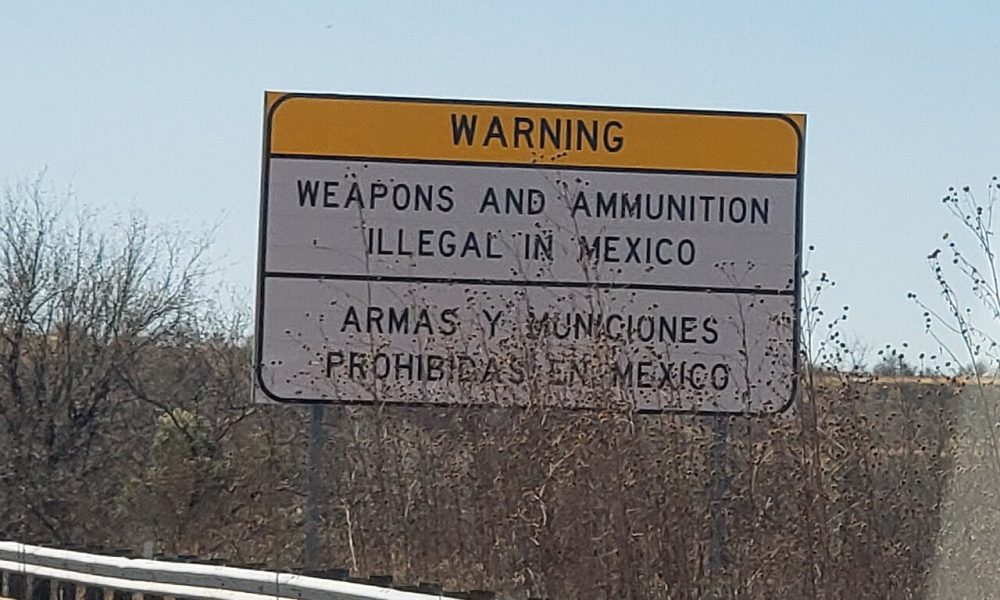
“Our Guns Make the Violence That People Are Fleeing”: Ieva Jusionyte on Guns & Violence in Mexico
-

A Tale of Two Families: Birthright Citizenship and Family Reunification for Chinese Migrants in 1925
-

Documenting Birthright Citizenship under Chinese Exclusion
-

The Right to Return: Chinese Merchants, the Scott Act, and Legal Knowledge in an Era of Exclusion


-

The Pacific Islands: United by Ocean, Divided by Colonialism
“Deep in the Pacific, the impact of Western colonialism runs deep: it even shapes the way Pacific Islanders experience time.”
-

To Understand Aztecs, Listen to Them
Have we who study Indigenous languages only succeeded in making things worse? And if this has happened, is there any way out?
-

Crossings into Indigenous Palestine
“If the olive trees knew the hands that planted them,” wrote Palestinian poet Mahmoud Darwish, “Their oil would become tears.”
-

Our Siege Is Long
Throughout his life, poet Muin Bseiso narrated the history of Palestinian struggle and criticized Western portrayals of Gaza. Today, Bseiso’s son dodges Israeli bombs to preserve his archives.
-

Where is the Archive, Anyway?: A Conversation about Empire and Filipinx Studies
“I love the moments where your books really linger on their encounters with power.”
-

Whose Homeland? Whose Security?
American overseas imperialism functions most powerfully through its infrastructures—debt, education, bureaucracy, mobility—filtered through DHS.
-

Borders Kill, but Not the Passport Privileged
In her new book, Belén Fernández is driven by an urge to expose empire’s death-making machine, even if it means exposing her own absurd participation in it.
-

Ingrid Rojas Contreras on “The Man Who Could Move Clouds”
“I realized that if I was going to write a story about healers, I also had to write a story about healing.”
-

Raquel Gutiérrez on “Brown Neon: Essays”
“Arts, writing, journalism—these things are born from our passions … this thing that is our weak spot.”
-

Socialist Nostalgia, Cuban State Power
Is it ever possible to reconcile clashing visions of national memory?
-

Héctor Tobar on “Our Migrant Souls: A Meditation on Race and the Meanings and Myths of ‘Latino’”
“One of the things that helps define Latino identity is this sense of having a history but also not knowing the history.”
-

Finding the Latinx City with Mike Amezcua and Pedro A. Regalado
“Sometimes Latino urban history is thought of as the history of a cultural community and that’s a little dismissive. I examine people contesting and reshaping the use of space.”
-

Sarah M. Quesada on “The African Heritage of Caribbean and Latinx Literature”
“This is a book that explores how African history—political history, cultural history, literary history—weighs and therefore haunts some of the stories that we tell ourselves about latinidad.”
-

Edgar Gomez on “High-Risk Homosexual”
In this latest episode of the Writing Latinos podcast, we talk about machismo, cockfighting, reconciling with parents, the Pulse nightclub shooting, bilingualism in contemporary literature, and the “messiness” of latinidad.
-

Saying Goodbye to Childhood: An Interview with Javier Zamora
“I hope people will see the heartbreak of a little kid having to grow up and say goodbye to his childhood in order to survive.”
-

Lorgia García Peña on “Translating Blackness”
In this latest episode of the Writing Latinos podcast, we discuss how some Afro-Latinas argue that the US census needs to accept that Latinos are not a race.
-

Graciela Mochkofsky on “The Prophet of the Andes”
In this latest episode of the Writing Latinos podcast, we discuss how a new book shatters preconceptions about religion in the Americas.
-

“No One Is There Who Has Somewhere Better to Be”: Talking Migration with Levi Vonk
“The asylum system is a rejection of anything that disrupts American universalism. It’s kicking people out who offer an alternative view of the world.”
-

Riding with Du Bois
Railroads—in the Jim Crow South just as in today’s Ukraine—employ physical infrastructure to create racial divisions.
-

How to Undocument a Narrative
For decades, undocumented Americans have been asked to tell their stories, in the hopes that this would galvanize political change. Did it work?