Section
Politics

-
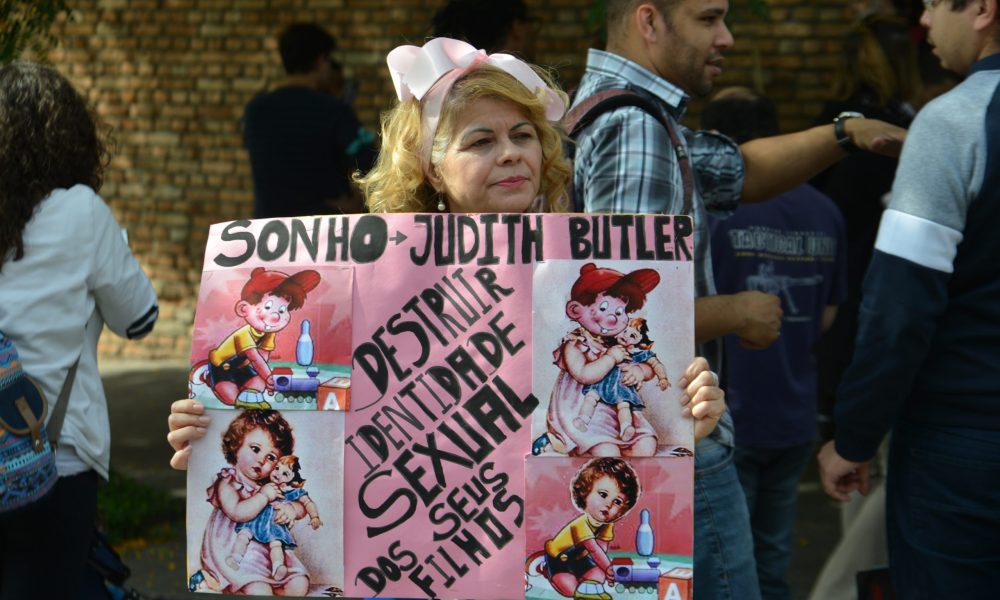
Necessary Villains: Explaining Cultural Marxism
“If Jews didn’t exist, the right would need to invent them, to act as the snake in the garden.”





-

What Works: Lessons on Fighting Oppression and Building Power From Across the Globe
When, how, and why does collective organizing achieve positive effects for those engaging in this difficult, and oftentimes risky, endeavor?
-

Philanthropy’s Power Brokers
An in-depth reckoning with the Gates Foundation as a discrete actor is long overdue.
-

Who Benefits from a “War on Corruption”?
Can anticorruption as a social movement or rhetorical strategy be a meaningful part of counterhegemonic resistance to such regimes?
-

White Suburbs and Drug Wars
To understand the racism of the drug war, in other words, we must look to the ways policymakers sought to protect white suburban youth.
-

Infiltrating the Family
For decades in the UK, police infiltrated the radical social movements by insinuating themselves into the intimate, romantic, familial, and comradely spaces of those on whom they spied.
-

Permission to Jeer
It’s clear that something has changed in conservative politics over the last decade. An exploration of pro-wrestling fandom sheds light on why.
-

The Border Patrol and Asylum Exclusion
Border Patrol has regularly abused its authority and mistreated immigrants and asylum seekers in countless ways. Yet its role as the frontline force in asylum exclusion has only grown.
-

“Things Happen, As They Do in War”: From Chaucer’s Siege of Troy to the Siege of Gaza
“Troilus and Criseyde” is not often regarded as war poetry. But in 2024, it’s impossible not to see the truth at the poem’s core: it’s a work about a city under siege.
-

An Open Letter to Harvard: Concerning Protest & Palestine
A group of disciplined students implore Harvard to demonstrate ethical forbearance and drop all of the dubious charges leveled against students who nonviolently protested for Palestine.
-

“A Theory of America”: Mythmaking with Richard Slotkin
“I was always working on a theory of America.”
-

D.A.R.E. Is More Than Just Antidrug Education—It Is Police Propaganda
DARE lost its once hegemonic influence over drug education, but it had long-lasting effects on American policing, politics, and culture.
-

The Pacific Islands: United by Ocean, Divided by Colonialism
“Deep in the Pacific, the impact of Western colonialism runs deep: it even shapes the way Pacific Islanders experience time.”
-

When NYC Invented Modern Policing: Emily Brooks on WWII–Era Surveillance and Discrimination
“I often think how much better off we would be if there were more free recreational activities for youth that were not nested under the carceral sphere.”
-

The Multiplication of Monsters: Misinformation from Gutenberg to QAnon
Throughout history the introduction of new technologies has increased the circulation and acceptance of rumors and disinformation.
-

What Makes a Prison?
Recent calls to bring back asylums suggest that confinement can be benevolent, even rehabilitative—but, in reality, “a prison is a prison is a prison.”
-

Iran’s Social Revolution: The Heartbeat Continues
What to do with the affective legacies of the Iranian left?
-

Weaving a Feminist Cyberlaw
Women invented cyberspace. Yet today’s internet rewards misogyny with fame, wealth, and power. Could it be otherwise?
-

What Really Makes Cities Global?
To ask what kind of city Los Angeles is today is, also, to wonder what kind of city it could be tomorrow.
-

The Protest Is Over—But Its Politics Remain
Ten years later, the Gezi Park protests continue to shape Turkish politics.
-

The Seduction of Desert Spectacles: Talking “Arid Empire” with Natalie Koch and Andrew Curley
“You cannot divorce domestic empire from international empire. Those histories created one another.”