Tag
Nonfiction
-
Long-Distance Talkers: The Great Depression Speaks
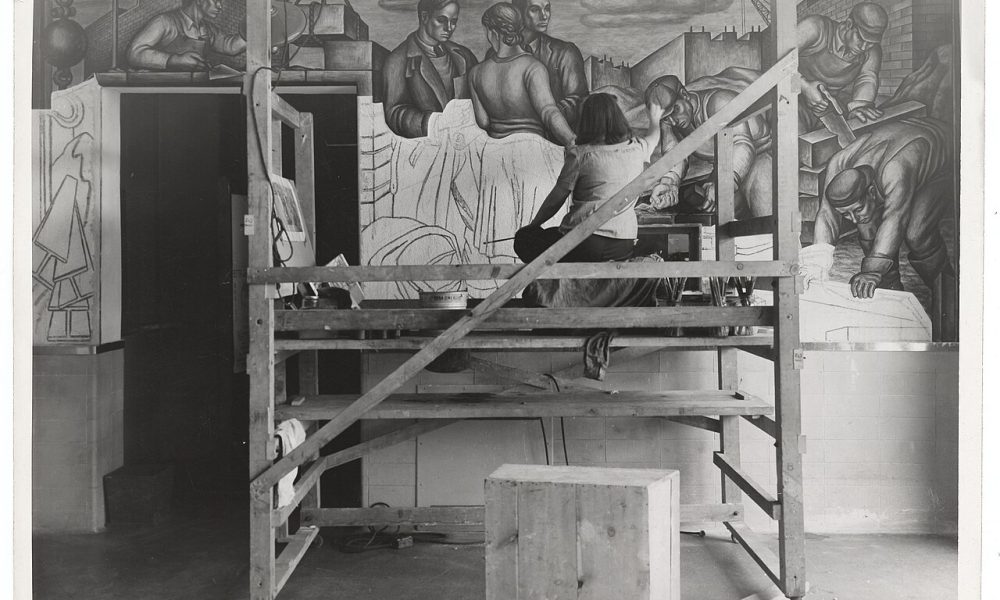
During the Great Depression, the Works Progress Administration conducted thousands of interviews among American workers. Anne Trubek’s “American Made” gives them new voice.


-

The Persistence of Monarchy
“It is a mistake to think that the British monarchy persists only as an anachronistic institution, grafted awkwardly if beguilingly onto our modern celebrity-obsessed culture.”
-

Comics Journalism, Comics Activism
It has been a good fifteen years now since our cultural gatekeepers collectively patted themselves on the back for having discovered that comics were “not just for kids anymore,” and in that time several remarkable achievements in the form have found their way into the critical spotlight. But for every Persepolis and Fun Home that…
-

Choking on Poverty: Inequality and Environmental Suffering
In the summer of 1978, a trucking company illegally dumped 31,000 gallons of used transformer oil along hundreds of miles of roads in Warren County, North Carolina. The location was no accident: This was the poorest county in the state, and the majority of its residents were black. Adding insult to injury, the state decided…
-
How Did Susan Sontag Get to be So Famous?
In our time, how many American critics have been celebrities? How many have had the kind of name recognition that allows them to be casually mentioned in a mainstream Hollywood movie, or enough star power to be featured (along with their apartments) in People, the magazine which pretty much invented today’s celebrity culture? Not many.…
-
The Politics of Sacred Life
Humanitarianism, according to Didier Fassin, is “a relatively recent invention” that has become “a potent force of our world” that is “global and yet uneven.” It has come, he asserts, to occupy “a key position in the contemporary moral order.” It is “mobilized in the practices of our societies, from the treatment of poverty, asylum, and…
-

Lives at the Urban Margins
“Every great city,” wrote Friedrich Engels, in The Condition of the Working Class in England, “has one or more slums, where the working-class is crowded together. True, poverty often dwells in hidden alleys close to the palaces of the rich; but, in general, a separate territory has been assigned to it, where, removed from the…
-

Rhythms of Risk: The Rise, Fall, and Rise of Silicon Alley
Dubbed “Silicon Alley” in the mid 1990s, New York’s tech scene at the turn of the millennium was a nexus of youth, cool, and well-paid creative jobs for geeks, artists, and writers. When it contracted, in 2002 many 20-something workers faced not only their own lay-offs, but what felt like the demise of an entire…
-

Errol Morris, Forensic Epistemologist
Earlier this year I was contacted by the editors at Zum, a new Brazilian photography quarterly, who explained how they’d lately taken …
-

The Janus Face of Conscience
Throughout the summer of 1938, Paul Gruninger was in charge of policing a small section of the Swiss border. A captain in the canton of St. Gallen, his job was to prevent entry from Nazi-controlled Austria. Germany had annexed Austria a few months previously, and thousands of Jews were by now trying to flee, but…
-

Dollars and Sex
House of Holes, Nicholson Baker’s celebrated return to dirty fiction, conjures an alternate sexual universe, where a broad range of heterosexual men and women (and one detached male body part) find deep, gushing satisfaction with one another, largely unconstrained by the anxieties, frustrations, and misunderstandings that bedevil modern sexuality. Slipping out of their unfulfilling lives…
-

The Rise of Finance
In a February 2011 interview, the United States Treasury secretary insisted that the future of the American economy depends upon the continued growth of its financial sector. “I don’t have any enthusiasm,” said Timothy Geithner, for “trying to shrink the relative importance of the financial system in our economy as a test of reform, because…