Tag
Nonfiction
-
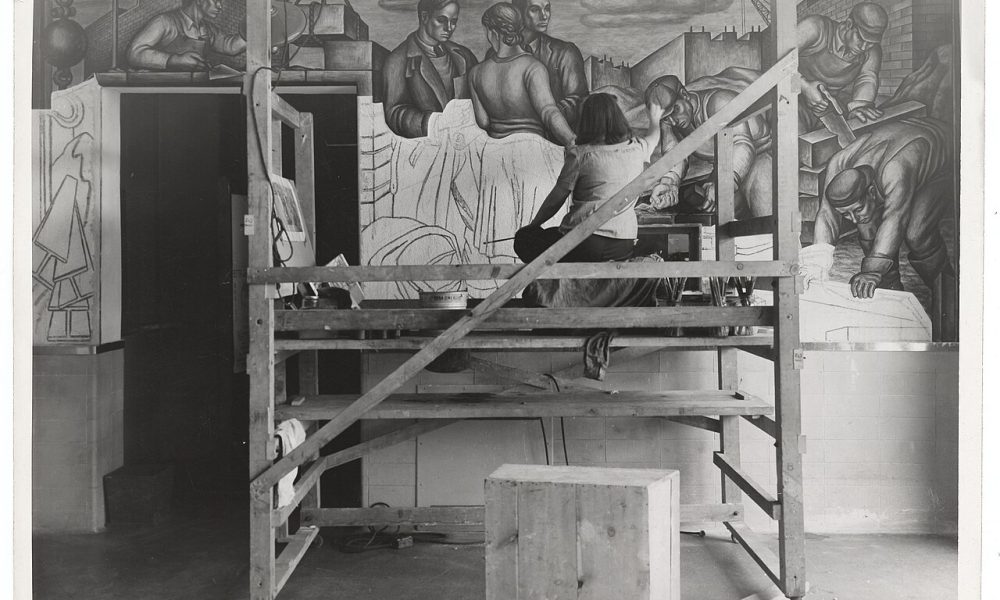
Long-Distance Talkers: The Great Depression Speaks
During the Great Depression, the Works Progress Administration conducted thousands of interviews among American workers. Anne Trubek’s “American Made” gives them new voice.


-

What Was the Classroom?
As many COVID-era courses have moved from seminar rooms to Zoom meetings, the haptic nature of teaching has changed. Is anything lost?
-

What Counts, These Days, in Baseball?
As technologies of quantification and video capture grow more sophisticated, is baseball changing? Do those changes have moral implications?
-

How to Build a World
Storytelling like that of Ursula K. Le Guin or Hayao Miyazaki reveals how real-world politics is similarly an act of collective “world building.”
-

The Arch of Injustice
St. Louis seems to define America’s past—but does it offer insight for the future?
-

Why Write? Toward a Style for Climate Change
What should climate-change writing be? What is its ambition as it moves forward?
-

When Martinique Cannibalized Colonialism
What to do with Confederate statues in the US South? Martinique didn’t just destroy its colonial-era statues—it rebuilt them into something else.
-

Poor Queer Use: Repurposing the Ivory Tower
Outside elite institutions, queer studies has the potential to go hand in hand with broader struggles of racial and economic justice.[none-for-homepage]
-

The Never-Ending Frontier?
The US imperialist wars in the Philippines, Korea, Vietnam, and Afghanistan grew from US wars against Indigenous people in the 19th century.
-

Opening the Anthropocene Archives
The Anthropocene has long been discussed in terms of hard science. What do the humanities have to teach about this human age?
-

B-Sides: Geoff Park’s “Nga Uruora: The Groves of Life”
Environmental wisdom can arise from being a better reader.
-

Museums as Monuments to White Supremacy
Millions of items looted from Africa during the colonial era remain housed in private collections and museums around the world.
-

Public Thinker: Katherine McKittrick on Black Methodologies and Other Ways of Being
“How might scientific storytelling, or stories of science, shape the struggle for liberation?”[none-for-homepage]
-

Science Turned Upside Down: Carolyn Merchant’s Vision of Nature, 40 Years Later
The Death of Nature wrote a new narrative of science that explored the costs of modernity for nature and humankind.[none-for-homepage]
-

Stop Reading like a Critic
Think about your favorite book. Now ask yourself: Would you admit this to others? Most would share—but literature professors are not most people.
-

Users of the World, Unite?
Critical examinations of the internet too often focus on the successes and failures of corporate leaders, rather than on the real constituents of online communities.
-

Leïla Slimani’s Taboos
Franco-Moroccan writer Leïla Slimani reveals the dirty underside of bourgeois domesticity. Is her taboo breaking worthy of praise?
-

Swimming in the Anthropocene
Human bodies in deep water feel nature’s power and our own relative weakness. As seas rise, we should heed the swimmers.
-

Atlantic Slavery: An Eternal War
Both violent surveillance and disease risk were integral to Atlantic slavery. That same war against Black people continues today.
-

Reading Patients, Writing Care
A palliative-care physician’s memoir foregrounds the affective aspects of attending to patients as an avenue to political activism.
-

The Oligarchs’ Charter
Today we know that, just as Adam Smith and Thomas Jefferson predicted, economic elites will never relinquish supreme power easily.