Being reviewed:

Advertisement

For three days in August 2022, the publishing world directed its attention not to Manhattan, but to Washington, DC, where the industry stood trial. Penguin Random House had attempted to acquire Simon & Schuster, a move that would reduce the “Big Five” publishers to just the Big Four. Viacom had been signaling their desire to unload Simon & Schuster for some time, and many—myself included—treated this merger as a foregone conclusion.
The United States Department of Justice, however, had other plans. The merger of Penguin Random House and Simon & Schuster, the government’s suit argued, would create a “monopsony.” Unlike a monopoly, in which the market is dominated by a single seller, a monopsony is a market dominated by a single buyer. Competition for as-yet-unpublished books would be greatly diminished, the DOJ alleged, if the Big Five were to be reconstituted as the Big Four. Not only would there be one less buyer if Simon & Schuster ceased operating on its own, but the merger would also give the newly expanded Penguin Random House even more control. The DOJ, in other words, was not concerned about the field of reception: the impact of the merger on book readers all across the country. Instead, the DOJ was concerned about the field of production. The chief transaction under consideration was not how books are bought and sold in the public marketplace—at what bookstore, say, or at what price—but how books are acquired by publishers.
Acquired from whom? Literary agents.
The literary agent is not the only or even the most important person involved in making a book. But the agent’s unique position between writer and publisher embodies the strategic alliances between art and commerce, form and finance, imagination and industry that has defined literary production in the twentieth and twenty-first centuries. Regardless of their representation, every writer contends with the competing and sometimes complimentary imperatives; this dynamic, exemplified by and resolved in the work of the literary agent, has shaped what we read and why.
And so, for three days in August 2022, trial testimony focused on the mechanics of the book auction, the method by which agents sell new manuscripts to publishers like PRH. Agents took the stand as witnesses for both the prosecution and the defense, detailing how they sell books: how auctions work, which editors they invite to participate, and how they determine the best possible sale. Would there be less competition for books if Penguin Random House bought Simon & Schuster? And would less competition be bad for writers, financially?
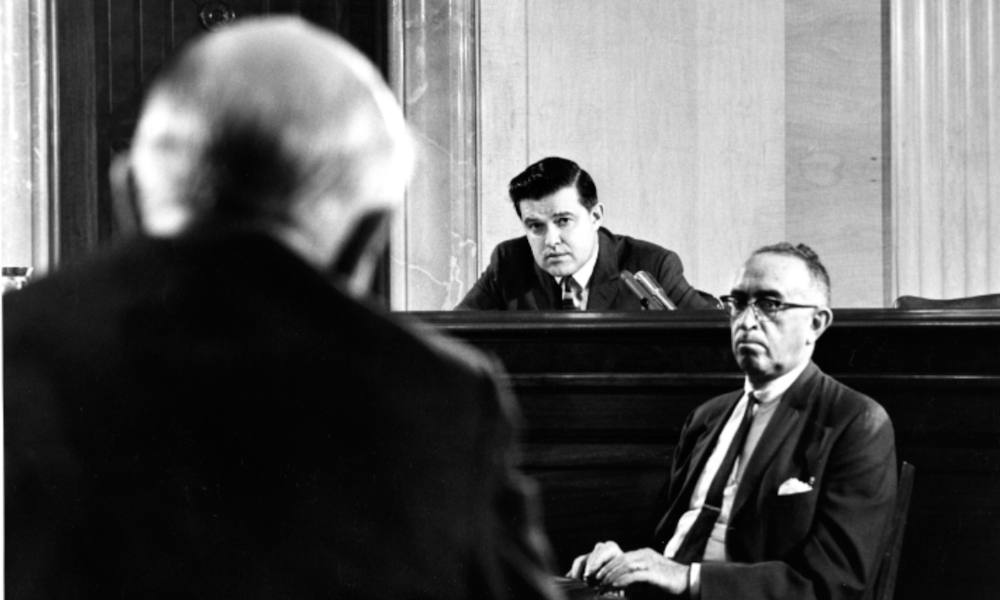
For three days, Judge Florence Pan received a crash course in agenting, trying to make sense of contradictory testimony and learn just how, precisely, the book business works.
Four agents testified on behalf of the defense—Elyse Cheney, Gail Ross, Jennifer Rudolph Walsh, and Andrew Wylie—who spoke in defense of PRH acquiring S&S. Though I was told by several agents that the majority of their colleagues opposed the merger, only one agent—Ayesha Pande—was called to the stand to testify for the prosecution, that is, against the merger.
The transcripts of the trial—thousands of pages, all told—make for an illuminating, if occasionally infuriating, read. Judge Pan, like the DOJ lawyers and those representing Penguin Random House, clearly expected publishing to work like a normal business, in which decisions are made strictly on the basis of profit and loss. But the court struggled to reconcile testimony that was, on its face, entirely contradictory (or would have been if one were selling, say, shoes): every agent testified that the best deal was not necessarily the most lucrative deal; simultaneously, they testified that it was their duty to act in the best financial interest of their clients.
How could both things be true? How could it possibly be in a clients’ best interest to take less money?
In one of the trial’s more excruciating moments, former WME agent Jennifer Rudolph Walsh (who was compensated, the prosecution was sure to document for the record, over a quarter of a million dollars for her voluntary testimony), insisted to Judge Pan, “It’s an art and a science. So you push [an auction] as far as you can until you get to a place where—again, these are people you know and you’ve done business with in the past—until you get to the place where you feel like this is—this is the right stop. And as I said, it’s an art and a science. It’s something that you feel.”
Middlemen delineates the science behind the art of agenting to show how a host of unique situations might add up to something like a strategy, a trend, a marketplace, a field, and a literature.
The equivocation didn’t stop there. Whether testifying for the defense or the prosecution, the agents all insisted: there is no typical; sometimes this, but sometimes that; every situation is different; yes and no; perhaps, perhaps, perhaps; it depends. And above all: if it served our client’s interests.
I had heard all of these answers before (though not under oath), and they didn’t surprise me. Still, I felt Judge Pan’s frustration as I read. Surely, it can’t all depend. Is it a business, or not? Is it about money, or not? In the end, is it an art, or is it a science?
Writing Middlemen: Literary Agents and the Making of American Fiction, I spent many hours interviewing literary agents, and even more obsessing over them. Many of my conversations, whether with the most senior or the most junior agents, included a variation on a theme. I would ask an agent a question, she would answer reflectively before changing course, explaining another time when the exact opposite thing happened. Hearing the contradiction—and, often, using that contradiction to illuminate a critical issue in her profession—she would pause. Then, she would ask, What are other people saying?
There is no school to become a literary agent, no degree or certificate that qualifies a person to represent writers to publishers and sell their work to the highest bidder. Agents learn the ropes as assistants, learning what to do (and what not to do) from someone senior. They develop their instincts by watching the bestseller lists, reading the trades, and gossiping over lunch. For as secretive as the industry is to outsiders, it is also hushed internally; agents are unwilling to give up their leverage to competitors. Aside from their employers or the coworkers with whom they strategize, they don’t actually know how many other agents work, let alone how common or uncommon their tactics are, how their strategies might compare to those of others, or what the result of these decisions might be at scale. How does the work of the literary agent shape contemporary literature? According to the agent, it depends. But talk to enough agents and you start to add the qualification: but not that much.
Whether or not agents answered to the court’s satisfaction, Judge Pan ruled in favor of the DOJ that the merger would, in fact, depress competition for books and create a monopsony; that less competition would, in fact, lead to less money; and that less money would, in fact, constitute a harm to writers. Penguin Random House could not acquire Simon & Schuster, and the two conglomerates would remain distinct.
The ruling is significant, signaling a new moment in the history of publishing in which international multimedia conglomerates give way to private equity. If the merger had gone through, it is unclear what the result may have been for agents, and relatedly, for authors; likewise, it is unclear what the result will be for the industry if it is taken over by private equity firms.
Yet, amid this instability and in the face of an unknown future, the concerns from agents are the same as they’ve always been. “I am worried about the future of intellectual literary content,” Lynn Nesbit told me. “Will people buy books? And more importantly, will they read them? All kinds of books: novels, history, culture, short stories. I worry about the number of readers who will, fifty years from now, appreciate and value fiction that isn’t just pure entertainment.”
Whatever people are reading in fifty years, and even “if there were only one publisher,” literary agent Elyse Cheney argued to Judge Pan, “I think I would still have leverage because I have what they need. . . . I have those keys to the kingdom.” Publishers might have money, but Cheney has the authors: their books, their content, their ideas.


Firmly on the side of the author, agents seem likely to stick around, though the way that they negotiate the coming landscape will certainly change—and, with it, contemporary literature.
Middlemen delineates the science behind the art of agenting: gathering data (qualitative and quantitative, big and small, contemporary and historical) to show how a host of unique situations—lived out by independent people with individual personalities and distinct tastes—might add up to something like a strategy, a trend, a marketplace, a field, and a literature. Maybe even a canon.