Tag
Environmental Studies
-

Public Thinker: Jayson M. Porter on Healing in Public
“I feel blessed to live so close to a country that’s had a revolution inform how people struggle for land around the world.”


-

The Holocene Hangover
As a child growing up in the early 1980s, I often daydreamed of space exploration and interstellar frontiers. The leap into outer space seemed tantalizingly close. In the science fiction stories I read, the chronology of the future was also the potential biography of adulthood. One story projected a settlement on Mars in 1995; another…
-

How to Live in Uncertain Times
Doomsday is a messy affair. We fix our anxious gaze on the horizon, awaiting the moment when the air will prove too warm, the sea too toxic, the ground unfirm. We live in a time we are calling the Anthropocene, an epoch in which our presence on Earth is inscribed in the geological record. We…
-

Design Against Disaster
What is to be done? We are the hapless victims of rising temperatures and tides, droughts and superstorms. Infrastructure buckles and the water is full of lead. Of course all urban ecological disaster is of our own making, but that doesn’t change the fact that the future looks bleak. Yet our narrowing horizons for joyous…
-

Too Bad About the Trees
This is the latest installment of our new blog series, An Engineer Reads a Novel. Heat and Light, Jennifer Haigh’s fifth novel, highlights the complexity, dirtiness, and danger of the labor of supplying the elemental heat and light of its deceptively simple title. Haigh sets her tale in a fictional coal mining town, Bakerton, Pennsylvania,…
-

Traveling the Camino de la Muerte: Floreana, Galápagos Islands
This is the latest installment of Public Streets, a biweekly urban observations series curated by Ellis Avery. There are only two roads in Floreana, Galápagos Islands. One goes along the coast for about a half mile. The other travels six miles up to the base of one of the extinct volcanoes on the island. Neither…
-

Alone on the Montague Plains
This is the latest installment of Public Streets, a biweekly urban observations series curated by Ellis Avery. Drive a few miles above the legal speed limit on Lake Pleasant Road, and you’re likely to miss the Montague Plains, unaware that the area is more than just passing scenery on the connector road between the villages…
-

City of the Future
This is the latest installment of Public Streets, a biweekly urban observations series curated by Ellis Avery. “Been gardening?” the Greens campaigner asks. I’ve stopped to chat, knees and hands grubby from the morning’s activity. “Yeah—just in the park back there, next to the oval!” I point behind her. “We’re planting a food forest.” “I…
-
On Cicadas
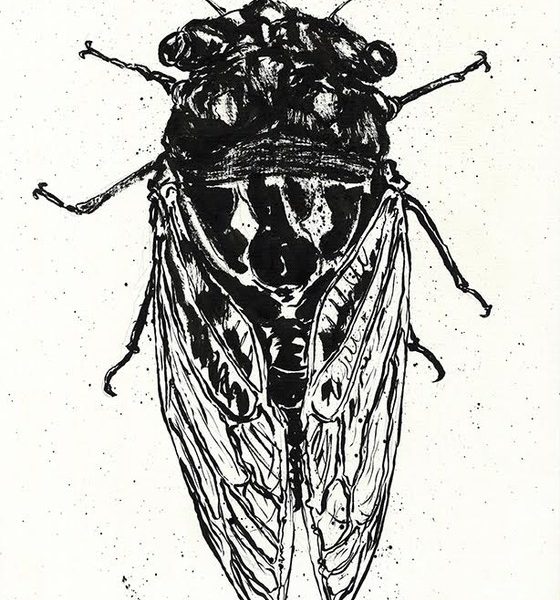
This is the latest installment of El Mirador, an ongoing series curated by Francisco Cantú. Spanish for “the lookout point,” El Mirador collects original nonfiction, translation, and visual art on the American West, the US/Mexico borderlands, and Indian Country. I stand outside to smoke a cigarette. I walk from my car to a store. I…
-

Planetary Politics
In 2000, the atmospheric chemist Paul Crutzen and the ecologist Eugene Stoermer proposed that the earth had entered a new age. The Holocene period, the geological term for the past 11,500 years, had given way to a new epoch—the Anthropocene. A warmer, more extreme, and less predictable pattern of weather had replaced the Holocene’s relatively…
-

Gates
This is the latest installment of El Mirador an ongoing series curated by Francisco Cantú. Spanish for “the lookout point,” El Mirador collects original nonfiction, translation, and visual art on the American West, the US/Mexico borderlands, and Indian Country. At dusk we find the cave entrance buried in the Chiricahua Mountains of southeastern Arizona. The…
-

Forget Fertility, Get Feral
What’s more important to our planet’s future than little children? Global warming is about them, we’re told, and it’s on their behalf that we have to do better. Climate scientist James Hansen titled his memoir and climate science primer Storms of My Grandchildren. Naomi Klein’s fertility struggles frame the closing act of her epic This…
-

Wellington’s Cuba Street: On the Restless Taniwha
This is the latest installment of Public Streets, a biweekly urban observations series curated by Ellis Avery. You can’t, it is said, beat Wellington on a good day. Those days come in January, in the height of the New Zealand summer. The wind softens to a breeze, silver sunlight floods the jade hills that surround…
-

Global Warming and Network Think
On August 26th, 2014, in the lead-up to the United Nations summit scheduled for the following month, the New York Times carried a story on the Intergovernmental Panel on Climate Change’s latest draft report on risks associated with runaway growth in the emission of greenhouse gases. Dramatic photographs accompanying the article showed receding ice cover…
-

Toxic Literature
When all that is solid melts into air, the plot thickens. Darragh McKeon’s debut novel, All That Is Solid Melts into Air, and Heather Houser’s first monograph of literary criticism, Ecosickness in Contemporary U.S. Fiction: Environment and Affect, both explore efforts to go on in situations of pervasive toxicity. Indicating the saturation of a particular space by…
-

Rereading Walden
Pete Seeger once said, “If there’s one thing worse than banning a song, that’s making it official.” One could say something similar about good books: the one thing worse than banning the book is …
-
Historical Futorology
These days headlines often read like plot points in an apocalyptic science-fiction story: Fossil fuel use has reengineered the earth’s atmosphere and acidified the oceans. Polar ice sheets are melting. Coastal cities are flooding. The planet has entered the epoch of the sixth mass extinction. Scanning the outline of this drama over your morning coffee,…
-
Beautiful Disaster
Hurricane Sandy, like many disasters today, was a media event. Striking images flashed across screens. The skyline divided into light and dark. Small groups of people huddled around power strips, vying to charge their phones and laptops. A photographer paused astride a bicycle in a deserted street. Uneven media coverage matched the uneven development of…
-

Encounters with the Thing Formerly Known as Nature
We used to call it nature: forests, lakes, foxes, butterflies, mosquitoes, dandelions. Soils and oceans. Seasonal cycles. Also floods and heat waves and the occasional hurricane. But no more: as Bill McKibben, the environmental writer and activist founder of 350.org, put it back in 1989, climate change implies the end of nature. Nature, McKibben argued,…
-

Megalopolis Now
It is no surprise that New York City, immodestly known as “the capital of the world,” figures so strongly in the popular imagination of apocalypse: think of the submerged Statue of Liberty in the ecodisaster film The Day After Tomorrow (2004). But New York’s iconicity, as a prime example of what sociologist Saskia Sassen calls…
-
Animal Studies
Sometimes it’s hard to be a woman, without turning into a beast. In Lydia Millet’s Magnificence, a widow feeling guilty about her husband’s death compares herself to a taxidermy display of stuffed carnivores. In Gillian Flynn’s Gone Girl, a blonde dream girl fakes her own kidnapping, slaughters her ex-boyfriend in flagrante, and threatens to abort…