Category
Essays
-
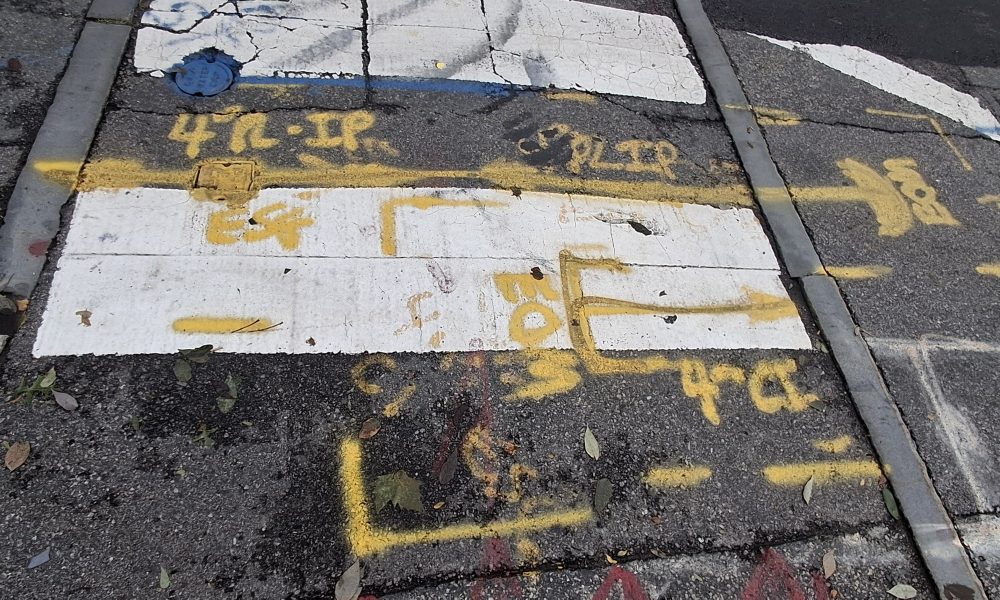
Law, Written in Spray Paint
“Paying attention to the temporary markings etched onto the asphalt, we are afforded a glimpse into the otherwise hidden world that lies below the city’s surface.”



-

Refuge: Denied. Asylum: Pending
The United States originates in settler colonialism, slavery, empire, and a long history of giving refuge to some while refusing refuge to others.
-

Abolish Migrant Prisons: A Manifesto
So long as the state can criminalize movement and eliminate groups deemed undesirable, no one is free.
-

From “Crisis” to Futurity
Introducing a new series to push forward our thinking and action about immigration and borders.
-

Can Algorithmic Bias Teach Us about Race?
Machines learned racism from humans. Perhaps humans can now learn about that racism from the very machines they taught.
-

Sex, Race, and Feminist Connection
History, Ann Stoler showed, is not just political action, disconnected from daily domestic acts. Intimate relations are worthy of serious study.
-

Four Ways to Ruin Dante—and One to Save Him
Why would Dante need help? Because if the poet’s only readers are Dante scholars, then we’ll all lose out. Dante deserves better, and so do we.
-

Building a Postcolonial Knowledge Commons
In responding to COVID, how should research libraries use the opportunity to tackle the ongoing crisis of postcoloniality?
-

The Indifference Engine
Nobody knows what will be useful in the future. And this is why we so often find humanistic activities in the seeds and roots of STEM.
-

Like Sands through the Hourglass
What will our children remember of this time, when their play and freedom are confined—or freed—by the digital?
-

Don’t Save the University—Transform It
“Why read and write about literature while the world burns?” Because, in working to end the oppression faced by so many, the humanities can help.
-

Imperialism: A Syllabus
Opposition to imperialism unites the struggles of our times. To recognize empire is to take a necessary step towards a more just world.
-

Electric Laboratory
“What are the compartments that have been placed around how we understand slavery and genocide and its impact on our lives and the world?”[none-for-homepage]
-

Literary and Manual Labors: Pittsfield, Massachusetts
“I have been building some shanties of houses …,” wrote Melville to Hawthorne, “and likewise some shanties of chapters and essays.”[none-for-homepage]
-

Who Gets to Be a Writer?
Despite welcome diversification, literary culture is also becoming more tied to elite educational institutions, and more difficult to enter.
-

Reading Resources: The Novel
A resource for reading about, teaching, and discussing the novel as an artistic and cultural form.
-

Beverly Cleary Forever (1916–2021)
Working as a children’s librarian in a “one-library town,” Cleary, age 23, found bored boys asking, “Where are the books about kids like us?”
-

The DREAM Act Was Never Enough
In 20 years, Congress has never passed the DREAM Act. What has been lost in chasing this legislation’s narrow dreams?
-

Eugenics Powers IQ and AI
Both the definition of “intelligence” and the tech industry are deeply entwined with white domination. Will white-supremacist AI be the result?
-

Can Game Theory Combat Discrimination?
Originally used to decipher the 1950s nuclear stalemate, the “Prisoner’s Dilemma” might reveal how resources are unfairly distributed today.
-

Quizzical: Which Academic Press Are You?
We don’t judge books by their covers, but we do sort people based on which academic presses match their personality types.