Tag
History
-

What Happens When Belief Stops Mattering?
“From the crushing of the Prague Spring in 1968 to the advent of Gorbachev’s glasnost in the mid-1980s, the Soviet Union was sustained not by terror or conviction, but by something harder to name: a routinization of participation.”




-

“Harry Potter” and “Hamilton” from the Stage to the Page
Move over, Shakespeare. The best-selling play on record is the script of the London theater smash Harry Potter and the Cursed Child, which was published as the latest installment of J. K. Rowling’s wizard saga this summer. In its first week, the script whizzed past the cumulative sales for the previously top-ranked Romeo and Juliet, making…
-

Americans in Bulgaria
Loving Eastern Europe is a tricky business. In theory, the term “Eastern Europe” is reductive and clumsy. In reality, it often feels deeply and self-evidently true. This puts those who document the region in a tough spot: how does one convey its idiosyncrasies to the Western eye without lapsing into Soviet caricature? As Anita Starosta declares in…
-

Who Builds Anything In This Country?
Colson Whitehead, you may have heard, has written a new novel. In The Underground Railroad, he has created a sympathetic protagonist, Cora, through whom readers can experience the surreal depredations of 19th-century …
-

The Afterlife of Agent Orange
“All wars are fought twice,” writes Viet Thanh Nguyen in Nothing Ever Dies, “the first time on the battlefield, the second time in memory.” Even decades after the first war ends, the second war can be just as brutal. For now the victors would get to rule over more than just territory: they would get…
-

From The War On Poverty To The War On Crime
Lethal police encounters between black Americans and law enforcement authorities have been a source of protest and resistance historically …
-

The Rhapsodes of Cinema
A. O. Scott’s Better Living Through Criticism—released in January of this year, to some fanfare—is a handbook for living by a kind of generalized critical “ideal,” one which combines openness to experience, capacity for discrimination, and respect for humane values and artistic standards. This kind of airy critical sensibility is unobjectionable in and of itself.…
-

How to Be a Global Historian
If the past is still required to understand the present, then approaching the past globally is an absolute necessity. But what does it mean to “think globally” today? What does a truly global history look like? Though it is quickly becoming one of the most dynamic—if confusing—subfields in the discipline, global history is not easy…
-

The Church House on Cannaday School Road: Floyd, VA
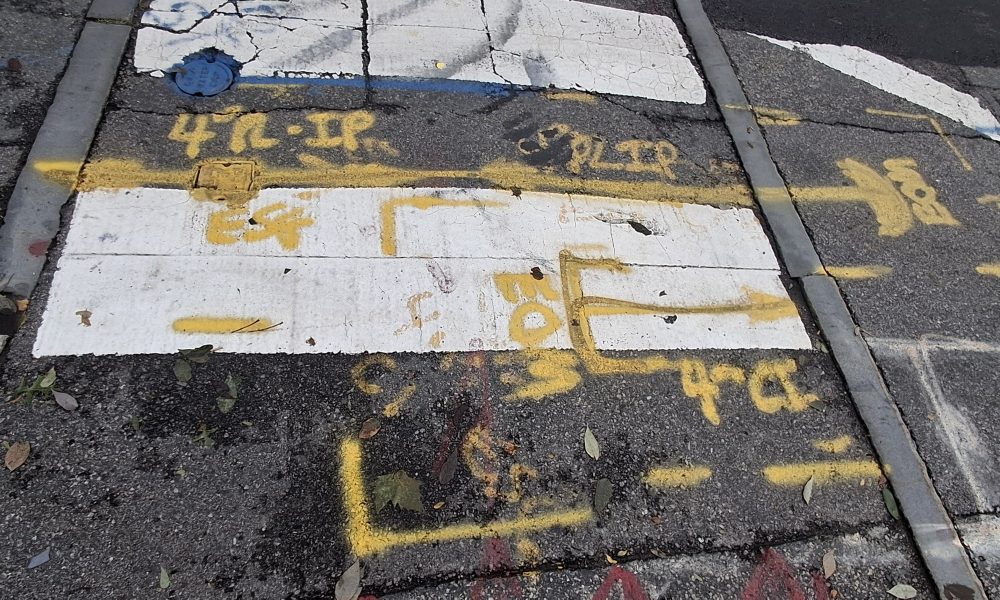
This is the latest installment of Public Streets, a biweekly urban observations series curated by Ellis Avery. Floyd, VA, sits at the intersection of State Highway 221 and Route 8, in the southwest point of the state. The sole stoplight in Floyd County guards that intersection, watching over the courthouse, an unadorned 20th-century clump of…
-

The Limits of What Is Thinkable
One viewer at the Democratic Primary debate in Des Moines last October asked the candidates a question: “Do black lives matter, or do all lives matter?” The same question has been on the lips of many thoughtful Americans for more than two years. Yet even as it percolated up to the nation’s aspirational power brokers…
-

Rio, Capital of Disaster Capitalism
The Olympic rings loom large over Rio de Janeiro. Seven years after the city won its bid to host the games, the impending two-week extravaganza has swept changes across the Marvelous City, as Rio is known, dividing its already conflict-riven social, political, and economic urban landscape even more deeply. In contrast to the heady days…
-

On Frantz Fanon: An Interview With Lewis R. Gordon
This article was originally published by The African American Intellectual History Society (AAIHS), and is reprinted here with permission. Lewis R. Gordon is Professor of Philosophy and Africana Studies at UCONN-Storrs; Visiting Professor of Philosophy and Government at the University of the West Indies at Mona, Jamaica; European Union Visiting Chair in Philosophy at Université Toulouse Jean…
-

How Spiritualism Spread
It seems unlikely that any era in human history was without its fascination with death or the desire to communicate with those who have passed into it. But the 19th century was a period in which breakthroughs in scientific inquiry, advances in technology, and renewed religious fervor in America and Europe conspired to offer the…
-

Trouble in Lovecraft Country
Matt Ruff’s novel Lovecraft Country drops into the world of science-fiction and horror publishing at an interesting time. The fandom around this culture is arcane and probably irremediably nerdy to outsiders, but even “mundanes” (non-fans) must have registered something of the huge boom in Lovecraftian horror that has plumed out through film, TV, and videogames…
-

An Ancient Treatise and the Making of Modern India
In the intellectual history of modern India, 1909 was a turning point. That year Mohandas Gandhi, a middle-aged Gujarati lawyer based in South Africa, wrote his slim but Galilean freedom charter, Hind Swaraj, or Indian Home Rule, which made the case for ending British colonialism in India. Vinayak Savarkar, eventually to be recognized as the…
-

“The Passing of the Great Race” @100
2016 marks a century since the publication of The Passing of the Great Race, a book described by the late paleontologist Stephen Jay Gould as “the most influential tract of American scientific racism.” Its author, Madison Grant, a genteel dabbler with impeccable establishment ties, was a pure and unabashed bigot, a patrician who defended social…
-

Comics versus Franquismo
In the late 1960s, dictator Francisco Franco slowly opened Spain to tourism while continuing to obliterate public memory of the retributions meted out after the Civil War (1936–9). I spent those years studying in Madrid, living for two semesters with a Spanish family. My professors were among the most distinguished of those who hadn’t sought…
-

A Black Power Method
A half-century ago this week, “Black Power” entered America’s mass consciousness. In early June 1966, James Meredith launched his “March Against Fear,” a one-man demonstration down the 220 miles of road between Memphis, Tennessee, and Jackson, Mississippi. Meredith hoped to inspire black men to exercise their voting rights, or at least to join him in…
-

The Gay ’70s
Is being gay just about sex? It’s difficult to imagine anyone asking the question today. If the taglines used to market lesbian, gay, bisexual, and transgender Americans to the country’s mainstream—“Love Wins,” “It Gets Better,” and “You Can Play”—have led to unprecedented levels of inclusion and visibility, it is precisely by shoving sex aside and…
-

Placerita Canyon
This is the latest installment of Public Streets, a biweekly urban observations series curated by Ellis Avery. North of Los Angeles, there is a canyon. It was once occupied by Tataviam Native Americans who hunted and gathered across it until the area was claimed, first by the Mexican government, then the United States. And there, in…
-

Roots 2.0
“In all of us there is a hunger, marrow-deep, to know our heritage—to know who we are and where we have come from.”1 Alex Haley penned these words in an attempt to account for the extraordinary popularity of his 1976 book Roots and its 1977 television miniseries adaptation. In Roots, Haley traces his ancestry back…